
Real problems. Answered by builders.
Hands-on workshops and business cases, set by companies. Students build the answer with AI.
210 students and 34 teams in two days at ESCP Berlin, after a conference for 800.
Real companies. Real cases. Students get hands-on experience building with AI.
Every case starts from a need a company actually has, often one AI has just created, so students learn what the market is asking for.
0
Applications handed in by 34 student teams in two days, at ESCP Berlin.
0 at our AI conference in Berlin
0
students in one ESCP cohort.
Three schools, three countries
Tsinghua in Beijing, ESCP in Berlin, Princeton in New Jersey.
If there is the slightest discrepancy, say so instead of rounding so that it comes out even.
written to the model, mid-build
Three things go wrong between what companies need and what students practise on.
Applied work at school is built to be thrown away.
The real question never reaches the room
A company's live problem becomes a teaching case years later, with the answer printed in the back of the book. Students practise on decisions somebody already made.
Time to the classroom
2026
2026
A company decides
2027
The case is written
2029
It is published
2031
It is taught
Illustrative timeline of a teaching case
From a company’s need to a project students can show. Four steps, run with you.
// Case 0142 · brought by a partner company
Pricing and go-to-market for a drinks brand entering a new country
Premium launch or fast payback? Two executives disagree, and the data has to settle it.
- // 01
A company brings a real need
We sit with the company and turn a need it actually has, often a new one brought by AI, into a case students can work on, with the real data attached.
- // 02
Students join a hands-on workshop
On campus or online, students form teams across schools and build the answer with AI coding tools, with us beside them from the first prompt.
- // 03
Teams ship something that runs
Every team hands in a working application, not a deck about it: a dashboard, a simulator or a model, deployed and open to click through.
- // 04
Feedback, then the company
Each team gets a written review of what held up and what did not. The company sees the work and meets the people who built it.
We don't run a course; we run a case. Every step is built so a junior leaves with experience a company recognises.
Bring us a caseBring a question. Students hand back something that runs.
The kinds of question a company can put to a team, and what the team builds with AI to answer it. Not a deck about it: a tool you can use.
A drinks brand asks
“Should we launch our drink in Germany, and how?”
Five teams take the same question. Each hands back a different tool, and together they answer it from every side.
- Team A · Simulatora price and margin simulator
- Team B · Go-to-marketa launch order, city by city
- Team C · Market studya survey study of the target buyers
- Team D · Dashboarda shelf-price watch on competitors
- Team E · Prototypea landing page to test demand
Already done once: 34 teams at ESCP each shipped a working application on a company brief.
Not praise. Instructions teams gave the model, in their own words.
Watch a team write to the model, then see what that one sentence changes in the app they are building.
Model
Dashboard ready. Showing live water risk for each city.
Madrid
Alert
Turin
Watch
Berlin
Normal
Figures are illustrative until the real feed is connected.
Prompts verbatim from one cohort of 34 teams, anonymised. The screens are reconstructions of what changed.
The case, the team, the build and the path, in one place.
What a student sees once they are in: real cases from companies, teammates from other schools, a place to build, and a path that leads somewhere.
- // 01
Students choose the case they want
Cases set by companies stay open while teams are forming. A student sees what is running, how many teams are on it and how long is left.
- // 02
You do not have to know anyone
Form a team inside your school, or with students from another one working the same case.
- // 03
Build it with AI, and keep how you did it
Teams build with AI coding tools. What they write to the model sits next to the code, so the feedback can speak to how they worked.
- // 04
A student can see where this is going
Resources, workshops and cases sit on one path, so someone who has never built anything knows the next step, up to the certificate.
Pricing and go-to-market
Water under pressure
Supply chain under sanction
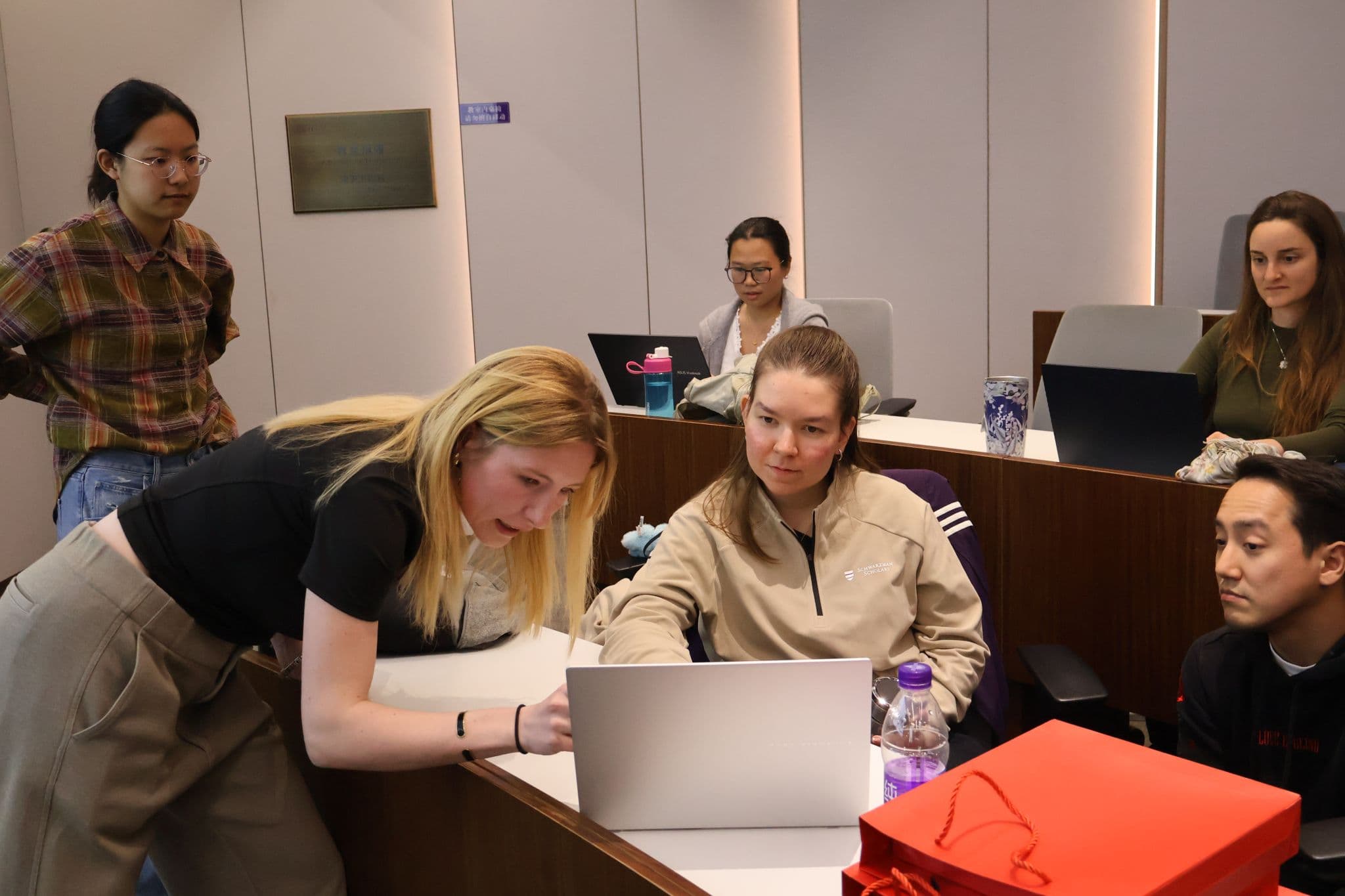
Tsinghua
MBA
Programme
International
Cohort
Workshop
Format
Beijing
Campus
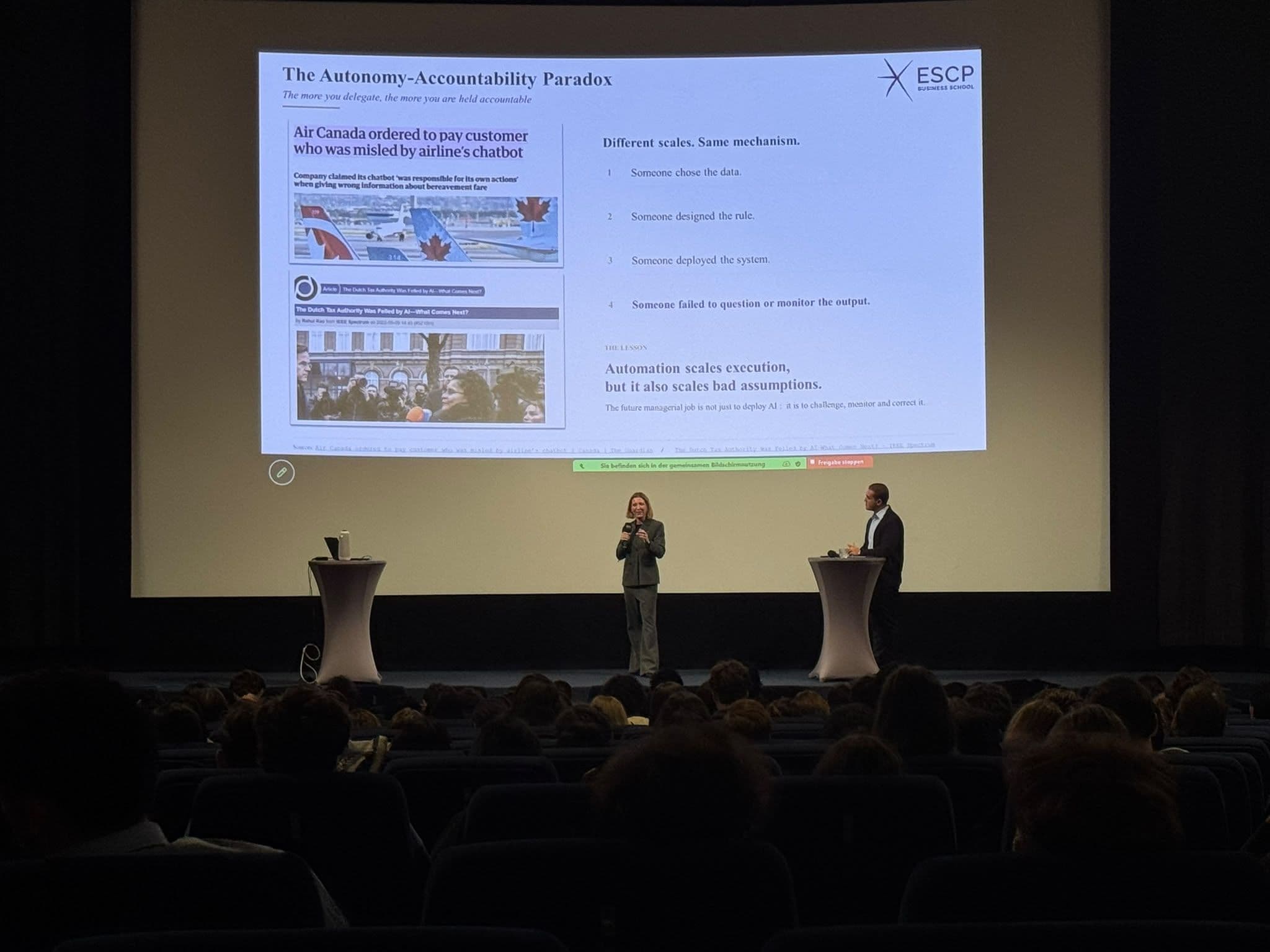
ESCP
210
Students
34
Teams
34
Apps handed in
2
Days on campus
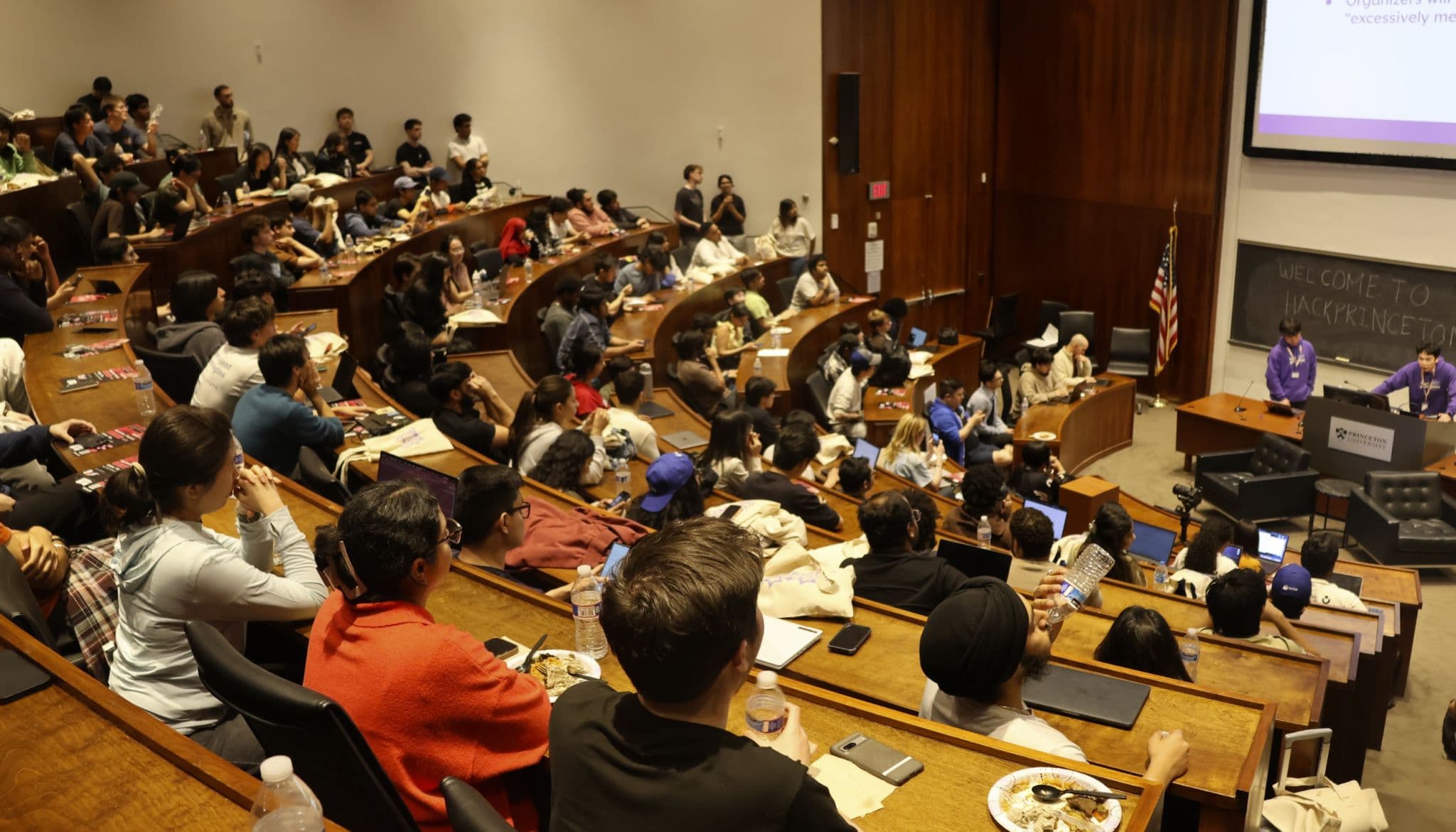
Princeton
Grad
And undergrad students
CS background
Profile
Workshop
Format
Princeton
Campus
What students said afterwards, anonymised to a team number because none of them agreed to be named.
I had never shipped anything before. Three weeks later there was a URL I could send my parents.
TEAM 12
ESCP cohort
The brief had no right answer in it. That was uncomfortable for two days and then it was the whole point.
TEAM 27
ESCP cohort
Being told what held up and what did not, in writing, was worth more than the mark would have been.
TEAM 04
ESCP cohort
We argued with the model more than we argued with each other, and the log of it is the best revision notes I have.
TEAM 19
ESCP cohort
Working with people from another school changed what we built. Nobody defended a bad idea out of politeness.
TEAM 31
ESCP cohort
The company read it. An actual company, reading a thing we made in a week.
TEAM 08
ESCP cohort
Bring us a real problem, and we will bring you the people to work it.
I'm a student
Join hands-on workshops and real company cases, build with AI, and leave with a project you can show.
Your need
I'm a company
Bring a need you actually have. Student teams build the answer with AI, and you meet the people who did it.
I'm a school
Give your students real company cases and a hands-on workshop on your campus, run by our team.
Companies pay for six months of cases. Students never pay.

Students
0 €
Free for every student
Join a case, build with AI, leave with a project.
- Hands-on workshops
- Live company cases
- A written review of your work
- A path to an ATELIA certificate
One case
5 k€/6 months
EUR, for six months
One need, worked by several teams, delivered.
- One case, several teams
- Platform access for six months
- A written review of every team
- The profiles who worked it
Two cases
8 k€/6 months
EUR, for six months
Two needs, platform access throughout.
- Two cases in six months
- Platform access for six months
- A written review of every team
- The profiles who worked it
Three cases
10 k€/6 months
EUR, for six months
Three needs, and the pick of the profiles who worked them.
- Three cases in six months
- Platform access for six months
- A written review of every team
- The profiles who worked them
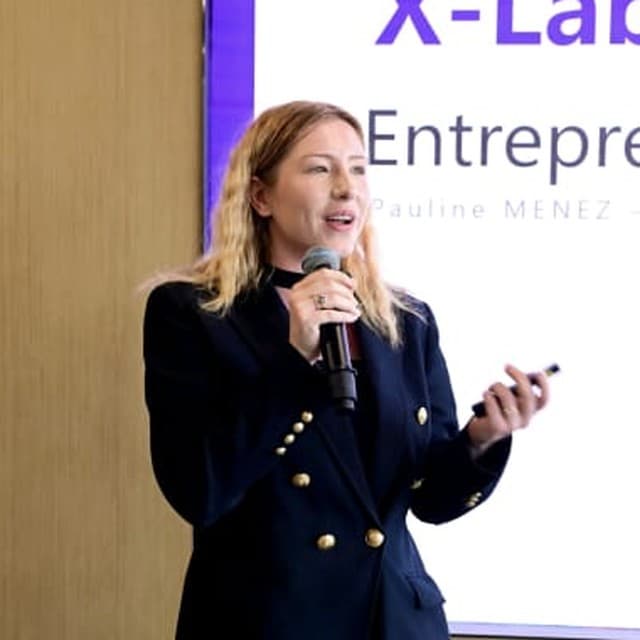
Pauline Menez
Co-founder, ATELIA

Sacha Khiroun
Co-founder, ATELIA
We believe juniors learn AI fastest on problems companies face today.
What companies expect from a junior is changing faster than courses can follow. We put both in the same room: the company brings the need, students build the answer, and each learns what the other needs.
How a case is paid for, who owns what a team builds, and what a school has to put in.
The questions people actually ask.
Companies pay for the cases they bring: from 5 k€ for six months. A school that wants a workshop run on its own campus pays for that workshop, 5,000 € excl. VAT with our travel and the students' tool access included. Students never pay.
No. They direct an AI coding agent. The cohort we ran at ESCP in Berlin were business students, not engineers, and all 34 teams handed in an application they had built.
Deliverables produced for a company's case are assigned to that company, in writing, before anything starts. The confidentiality terms are agreed at the same time.
A company sees the work and meets the people who did it, and may offer an internship or a job. A student who says no loses nothing: their work is reviewed the same way.
It stays deployed and keeps running. Nothing a student built is published by us without their say-so.
A company case stays open for six months, with one call a month. A workshop runs over a small number of days, on campus, with a whole cohort at once.